Finn Scale Co. / Rail Scale
Low-Profile Modular Rail Scale
Modular rail weighing solutions for sites evaluating a low-profile scale arrangement.
Discuss Your Project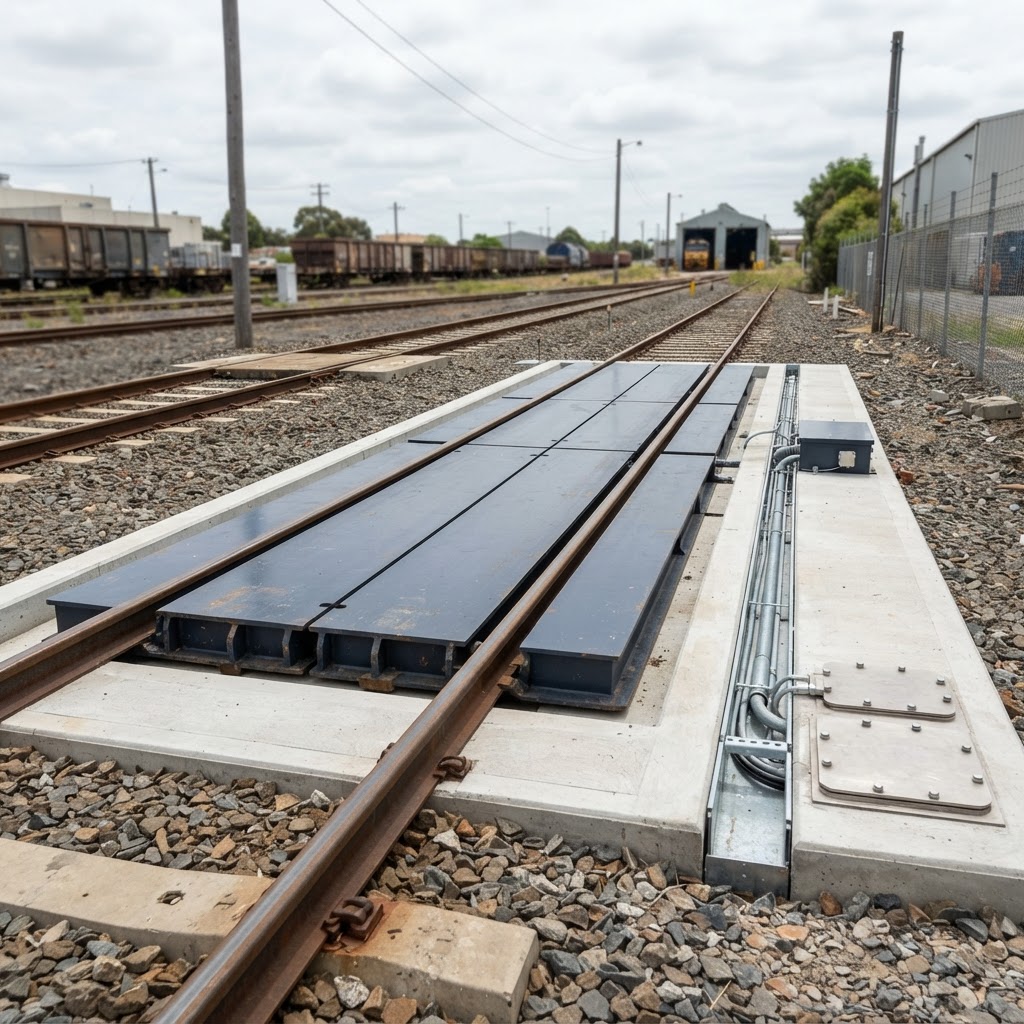
Applications & support
- Rail projects with depth constraints
- Modular rail weighing installations
- Existing siding equipment evaluation
- Industrial rail sidings
- Bulk material handling
01 / Rail Scale
Evaluate the modular approach
A modular system uses weighing sections configured for the railcar and track application. A low-profile arrangement may be useful where installation depth and existing site conditions are important constraints.
02 / Rail Scale
Check the engineering requirements
Finn Scale can discuss system selection based on axle spacing, loads, rail geometry, and site access. Specific dimensions, capacities, foundation requirements, and approvals depend on the selected system.
03 / Rail Scale
Modular design concept
A modular rail scale uses weighing sections that can be configured for the railcar type and track application. Rather than a single long weighbridge, the system uses shorter weighing modules that are installed in the track at specific positions. A low-profile arrangement may be useful where installation depth and existing site conditions are important constraints. The modular approach can reduce installation cost and complexity compared to a full-draft pit installation.
04 / Rail Scale
Weighing section configuration
The weighing sections must accommodate railcar geometry and the intended measurement procedure. For full-draft weighing, the sections must span the entire railcar length. For two-draft or axle-by-axle weighing, shorter sections may be used. Axle spacing, wheel loads, rail interface, and installation tolerances influence configuration. The number and arrangement of modules affect both the cost and the accuracy of the system.
05 / Rail Scale
Installation depth & site constraints
A low-profile arrangement does not eliminate foundation, drainage, or approval requirements. Confirm available installation depth, service clearances, and access for future maintenance. The scale pit depth affects the cost and complexity of excavation and concrete work. A shallow pit may be feasible where soil conditions, water table, or existing underground utilities limit excavation depth. Track work should be coordinated with the responsible railway parties. Specific dimensions, capacities, foundation requirements, and approvals depend on the selected system.
06 / Rail Scale
Load cell technology
Low-profile rail scales may use shear beam, compression, or other load cell types designed for the installation depth and load requirements. Load cell capacity must match the maximum wheel loads. Digital load cells support individual cell diagnostics and are more resistant to electrical interference. Analog load cells are simpler and widely supported. Environmental protection (IP rating) and material (stainless or tool steel) should match the installation conditions.
07 / Rail Scale
Application suitability
Finn Scale can discuss system selection based on axle spacing, loads, rail geometry, and site access. A low-profile modular system may be suitable for applications where a full-draft installation is not feasible or where cost is a primary consideration. For applications requiring high accuracy or legal-for-trade approval, a full-draft system may be more appropriate. Foundation design and site requirements remain application-specific. Installation depth is only one factor in determining project scope.
What to include in your inquiry
- Railcar axle spacing and loads
- Available installation depth and track layout
- Foundations, drainage, and service access
Helpful answers