Finn Scale Co. / Rail Scale
Rail Scales
Finn Scale provides rail weighing solutions for railcar and bulk-material operations.
Discuss Your Project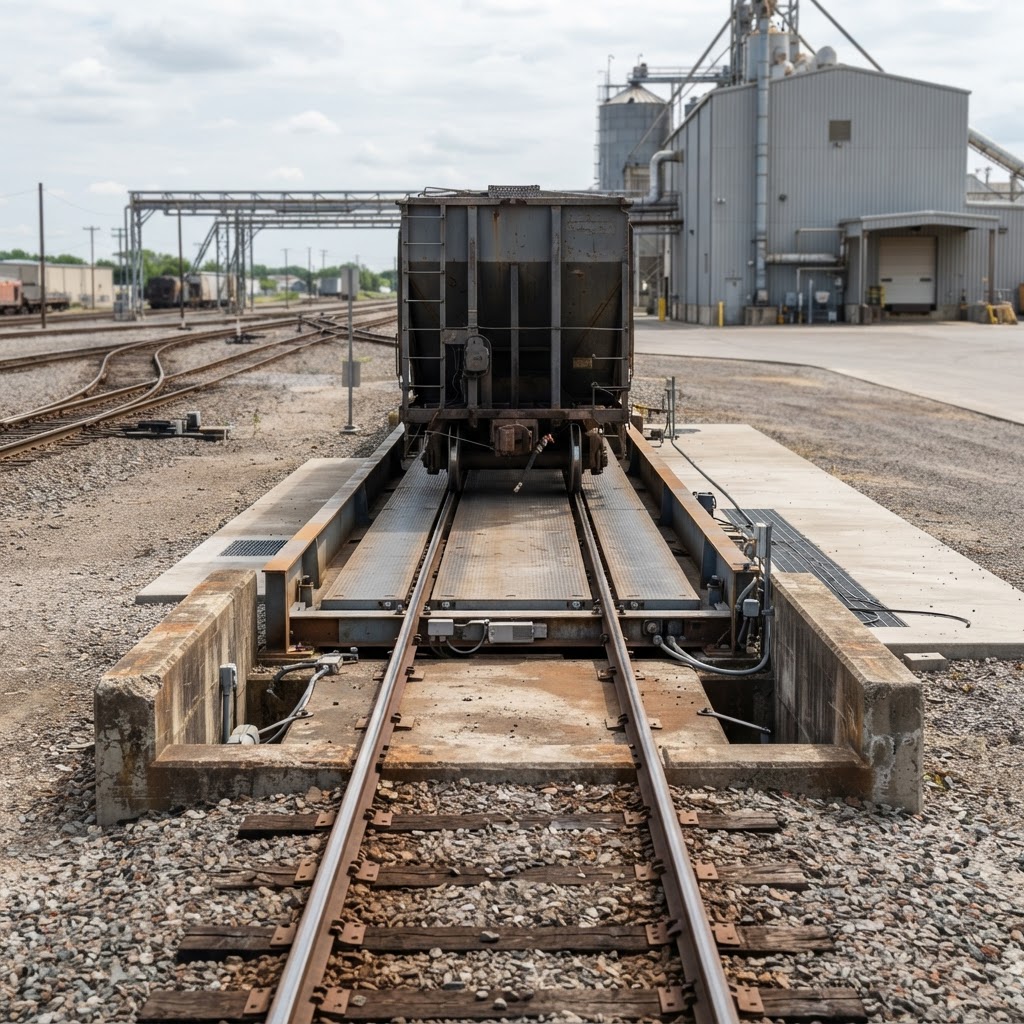
Applications & support
- Railcar receiving and shipping
- Bulk-material transaction weighing
- Industrial rail siding projects
- Agricultural commodity weighing
- Mining and minerals operations
01 / Rail Scale
Define the rail weighing application
Railcar type, maximum load, track arrangement, and operating procedure guide system selection. Static weighing and in-motion applications have different equipment and installation requirements.
02 / Rail Scale
Review the site and approvals
Track geometry, foundations, drainage, access, and connection to reporting systems require coordinated planning. Discuss your application with Finn Scale; railway approvals and legal-for-trade requirements must be established for the project.
03 / Rail Scale
Static vs. in-motion rail weighing
Static rail weighing uses a weighbridge installed in the track that measures each railcar individually while it is stopped. This is the most accurate method and is suitable for commercial transactions. In-motion weighing measures railcars as they pass over the scale at low speed, without stopping. In-motion systems are faster and suitable for high-volume operations but are generally less accurate than static systems and may not meet legal-for-trade requirements. Choose the weighing method before comparing designs or reporting options.
04 / Rail Scale
System types & configurations
Rail weighing systems include full-draft (the entire railcar is weighed as a single unit), two-draft (the railcar is weighed in two sections), and axle-by-axle (each axle is weighed individually). Full-draft is the most accurate; axle-by-axle is the least accurate but the simplest to install. The system type depends on the required accuracy, the railcar type, and the track arrangement. Some systems use a single weighbridge; others use multiple weighing sections.
05 / Rail Scale
Track interface & installation
Rail alignment, foundations, drainage, and service access affect performance and maintainability. The rails must be continuous and correctly aligned across the weighbridge. The foundation must support the weighbridge and the dynamic loads of passing railcars. Drainage must prevent water accumulation in the scale pit. Rail joints, expansion gaps, and rail fastening systems must be compatible with the weighing system. Installation typically requires track work, concrete work, and electrical work, coordinated with railway operations.
06 / Rail Scale
Reporting & data management
Reporting systems should capture the identifiers and weight records needed for the operation. A rail weighing system may record the railcar number, commodity, gross, tare, and net weight, along with the date, time, and operator. Data may be exported to an ERP, WMS, or rail management system. Consider whether the system needs to interface with existing railcar identification systems (AEI tags, manual entry, or camera-based recognition).
07 / Rail Scale
Approvals & regulatory requirements
Identify railway approvals and site responsibilities before installation. Rail weighing systems may be subject to railway authority requirements, weights and measures regulations, and industry standards. For commercial transactions, the system must meet legal-for-trade requirements, which include equipment approval, installation, inspection, and periodic recertification. Discuss your application with Finn Scale; railway approvals and legal-for-trade requirements must be established for the project.
What to include in your inquiry
- Railcar types and gross weights
- Static or in-motion weighing requirements
- Track layout, reporting, and approvals
Helpful answers