Finn Scale Co. / Scale Services
Truck Scales
Finn Scale provides truck scale sales, installation, repair, and calibration for commercial vehicle and bulk-material weighing across Eastern Pennsylvania, New Jersey, and Northern Delaware.
Discuss Your Project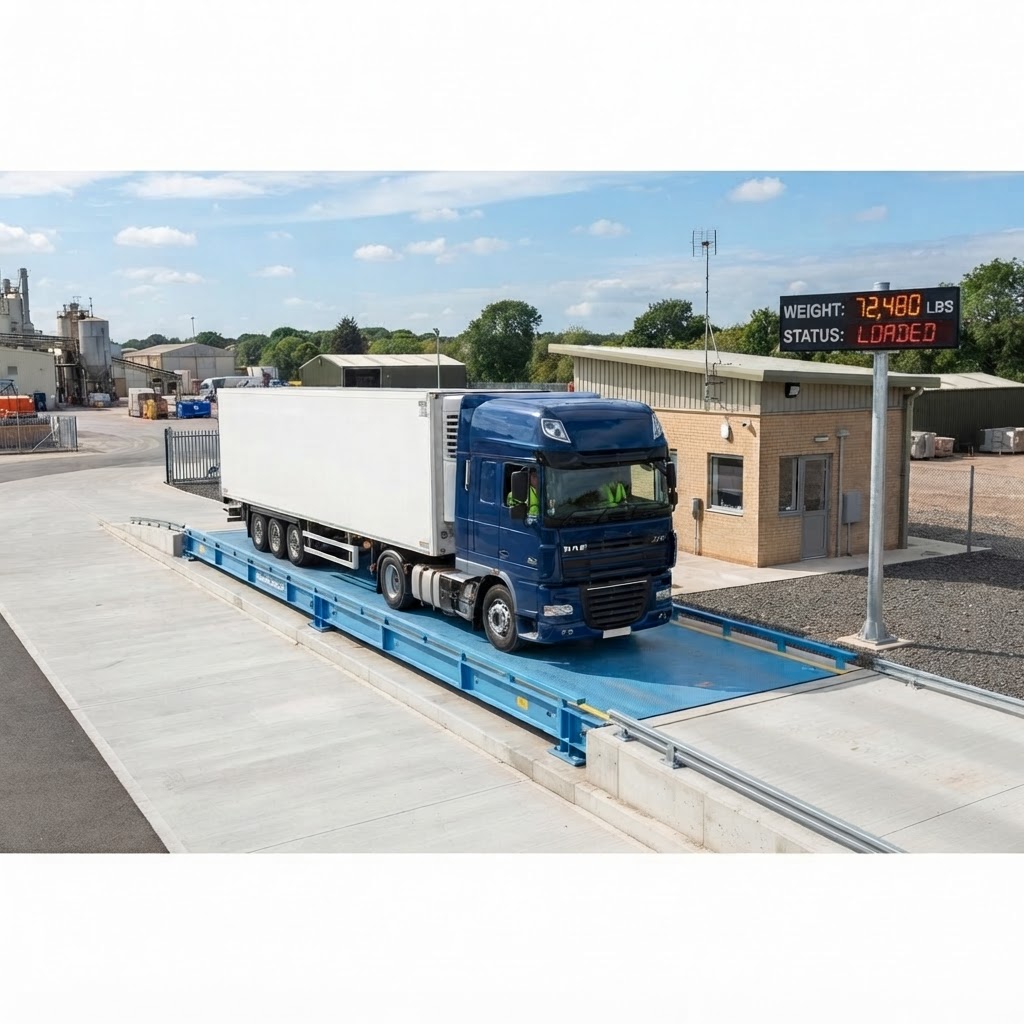
Applications & support
- Bulk-material receiving and shipping
- Commercial vehicle transaction weighing
- Manufacturing and recycling yards
- Waste transfer and landfill operations
- Agricultural commodity weighing
01 / Scale Services
Match the scale to the traffic
Vehicle length, axle spacing, load capacity, and daily traffic determine the starting point for selecting a truck scale. Steel and concrete deck designs, installation layout, and approach conditions should be evaluated together.
02 / Scale Services
Complete weighing workflows
A truck scale can be paired with indicators, printers, kiosks, and reporting systems. Finn Scale can discuss equipment selection, installation, calibration, and ongoing service for your site. Legal-for-trade requirements depend on the application and jurisdiction.
03 / Scale Services
Selecting the right capacity & deck length
Truck scale capacity is not simply the maximum weight of the heaviest vehicle. It must account for the concentrated load capacity, which is the maximum load the scale can support over a specific section of the deck. A vehicle with closely spaced axles may apply more load per foot of deck than a longer vehicle with the same total weight. Deck length should accommodate the longest vehicle configuration that will use the scale, including any trailer combinations. A scale that is too short requires axle-by-axle weighing, which is less accurate and not suitable for legal-for-trade transactions.
04 / Scale Services
Steel vs. concrete deck designs
Steel deck scales are lighter, faster to install, and generally less expensive upfront. They are well suited to applications where the scale may need to be relocated or where installation speed is a priority. Concrete deck scales are heavier and more durable under high-traffic, heavy-load conditions. The concrete surface provides better traction in wet or icy conditions and resists the corrosion and denting that can affect steel decks over time. Both designs have established track records; the choice depends on traffic volume, load characteristics, climate, and long-term maintenance considerations.
05 / Scale Services
Load cell technology & reliability
Modern truck scales use digital or analog load cells to convert the mechanical force of a vehicle's weight into an electrical signal. Digital load cells transmit a processed digital signal that is more resistant to electrical interference and supports individual cell diagnostics. Analog load cells are simpler and widely supported but are more susceptible to signal degradation over long cable runs and lightning damage. Load cell capacity, material (stainless vs. tool steel), and environmental protection (IP rating) should match the installation conditions.
06 / Scale Services
Approach conditions & site requirements
A truck scale is only as accurate as its approaches allow it to be. Approach slabs must be level, the same width as the scale, and long enough for the entire vehicle to rest on solid ground before entering and after exiting the weighbridge. Curbs, guide rails, or wheel guides help keep vehicles centered. Drainage must direct water away from the scale and its foundation. Sites with poor drainage, frost-susceptible soils, or restricted vehicle maneuvering space may require additional civil work to achieve acceptable conditions.
07 / Scale Services
Legal-for-trade considerations
If the scale is used for commercial transactions (buying or selling goods by weight), it must meet the requirements of the local weights and measures authority. This typically involves using an approved scale model, having it installed to specifications, having it tested and sealed by an inspector, and maintaining it in a condition that preserves accuracy. Requirements vary by jurisdiction and application. Finn Scale can discuss equipment selection, installation, calibration, and ongoing service for your site, but legal-for-trade requirements depend on the application and jurisdiction.
What to include in your inquiry
- Largest vehicle and anticipated gross weight
- New installation or replacement
- Ticketing, software, and unattended operation
Helpful answers